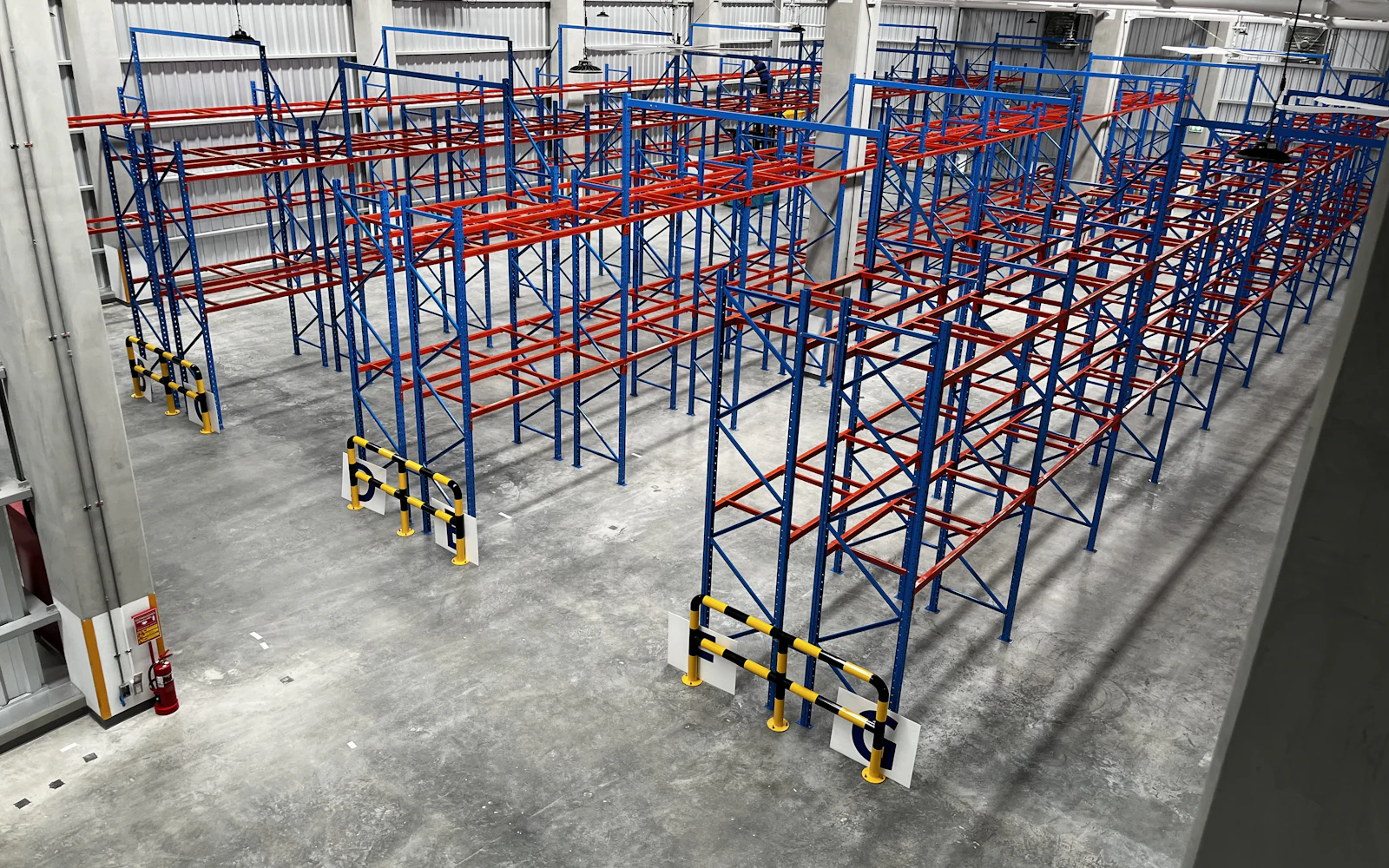
Racking repairs
An inspection report lists the damage. A repair crew replaces it, part for part, so the bay can carry its rated load again.
Get a quoteMost racking repairs follow straight from an expert inspection. The report gives each defect a location and a colour, and the colour sets the clock. Red means the bay is offloaded and closed until it is repaired. Amber means repair soon, while the bay is not loaded beyond what the inspector allows.
Good repair work is undramatic. The crew isolates the bay, takes the load off, swaps the damaged component for an identical one from the same system, refits safety locks and checks plumb. Then the bay goes back into use and the damage register is updated.
What gets repaired, and how
| Component | Typical damage | Usual fix |
|---|---|---|
| Uprights (frame legs) | The most common damage: forklift strikes at the base of the frame. Bends, dents and splits beyond the limits in the inspector's guidance mean replacement. | A whole new upright, or a manufacturer-approved repair section bolted in at the base. |
| Beams | Sagging under load, bent faces from pallets being dropped, or cracked welds at the connector. | Like-for-like beam from the same system, with new safety locks. |
| Bracing | Diagonal and horizontal braces get knocked or come loose. | Replacement brace and fixings; if the frame is badly bent, the whole frame. |
| Base plates and anchors | Missing floor bolts let a frame walk when it is struck. | New base plate and anchors drilled into sound slab. |
| Safety locks and pins | Missing locks let a beam lift out of its slot when a pallet catches it. | Replacement locks across the whole run, often done on the day. |
| Column guards and end barriers | Not damage as such, but the inspector will note where they are missing in truck aisles. | Bolt-down guards on exposed uprights and barriers at aisle ends. |
Why like-for-like matters
Every load notice on your racking assumes a particular beam, frame and bracing pattern. Swap in a stronger-looking beam from another maker and the safe load on that notice no longer means anything. HSE's guidance says alterations need the manufacturer's data or the supplier's approval (HSG76). Ask the repair firm to confirm the parts match your system before they quote.
Getting a repair price
Repairs are almost never priced up front, because they depend on what the inspector found. Firms quote per component (uprights, beams, bracing, locks, anchors) plus labour, and sometimes a charge to offload and reload the bay. To get a fair comparison, send each firm the same defect schedule from your report.
If the firm that inspected your racking also sells repairs, that is normal. If you would rather keep the two apart, tell us you want an inspector who doesn't sell repairs and we will look for one; then use the report to get repair prices separately.
Keeping the repair bill down next year
Most damage comes from forklifts at floor level. Column guards on exposed uprights, end-of-aisle barriers, wide enough aisles for the trucks you run and a habit of reporting knocks at once all cut the list. Our post on racking protection covers where guards are expected, and the cost page shows what the inspection itself costs.
Repair deadlines under HSE guidance
- Regulation
Work equipment must be kept in an efficient state, in efficient working order and in good repair (PUWER regulation 5).
- Interval
Red: offload and isolate at once. Amber: repair as soon as possible, and within four weeks or it becomes red (HSG76 Table 11).
- Ask for
A note from the fitter of each part replaced and the date, so your damage register stays current, kept with the inspection records (HSG76).
Repair questions from site managers
How quickly must amber damage be repaired?
HSG76 treats amber as damage to be repaired as soon as possible. If it has not been put right within four weeks, it is treated as red, so the bay has to be offloaded and closed (HSG76). See our guide to the traffic light ratings.
Can we straighten a bent upright?
No. Steel racking components that are bent are replaced, not heated or hammered back into shape. Straightening changes the steel and the load the frame can carry.
Can we use parts from a different racking system?
Not without the manufacturer's or supplier's say-so. Beams and uprights from different systems often look alike but have different connectors and load ratings.
Who signs off the repair?
The fitter records what was replaced, and your person responsible for racking safety updates the damage register. Many sites ask the inspector to confirm repairs at the next visit. The weekly checklist has a column for it.
Where these rules come from
Repairs to arrange?
Postcode, name, phone and email. We look for a racking repair firm near the site and send you its name first; nothing about you moves until you say so. Free to use.
Pallet Racking Inspection is an independent matching service and does no inspecting itself. Fees, dates and terms are agreed between you and the firm.
Received
- Watch your inbox for the name of an inspection firm near the site.
- Reply yes to be put in touch, or no to stop.
- If yes, the firm gets in touch to talk through bays and access.